For another exciting online session by the Lahore Literary Festival, I interviewed Sheela Reddy in Delhi where she lives and works. Sheela is a seasoned journalist, now author, and was the books editor at Outlook India magazine for several years. For the online conversation, we put a spotlight on Ms Reddy’s book Mr & Mrs Jinnah: The Marriage That Shook India (published by Penguin Random House India in 2017).
M.A. Jinnah with his daughter Deena
There is no doubt that Mr Jinnah’s very personal life has alluded us, as well as many of his biographers. This wonderful book by Ms Reddy takes us to that period in Mr Jinnah’s life when he was a successful lawyer and dynamic politician based in Bombay —a member of the Imperial Legislative Council of India.
Sheela Reddy looks at the larger social context of earlier 20th century India, the cultural and social history of the era — especially Bombay in the teens and the 1920s. Through various interesting sources, Sheela recreates this intimate part of Mr Jinnah’s life — this is the story of a Kathiawari businessman’s son from Karachi who comes to Bombay via London, someone who reinvented himself to become one of the most successful legal minds in Bombay post World War I, someone who was entirely self made— yet handsome, charismatic, and with no frivolity about him.
For us in Pakistan, Mohammad Ali Jinnah has always been presented as a revered father figure, but in Sheela Reddy’s book he is the dashing young lawyer, politician and a husband. Setting up the social and political backdrop of the tie, Sheela gives the reader fascinating details of the only woman M.A. Jinnah allowed to invade his private heart and the incidents that led to his brief and tragic marriage to Rattanbai (Ruttie) Petit, known to us as Ruttie Jinnah.
Sheela Reddy’s sources include oral history, newspaper clippings, and most importantly, letters to and from Ruttie Jinnah to friends, mostly activist and politician Sarojini Naidu and her daughters Padmaja Naidu and Leelamani Naidu. Sarajoni Naidu admired Mr Jinnah intensely and was a great friend to Ruttie — she herself had an unconventional life and first romance.
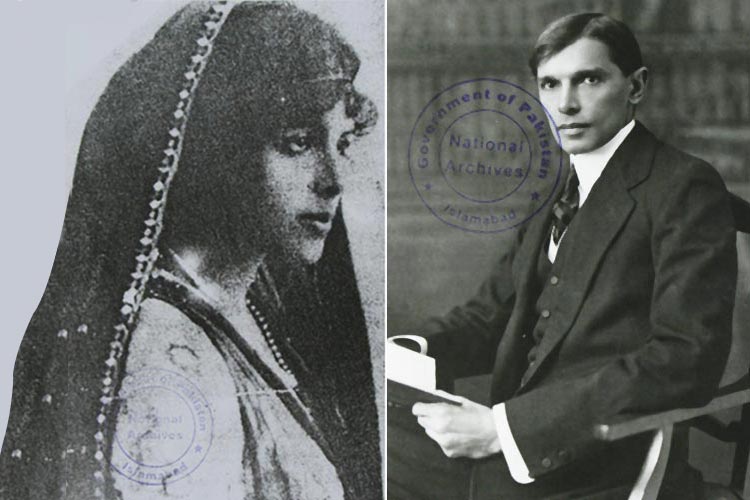
Ruttie Jinnah (1900-1929)
Ruttie Jinnah (1900-1929)
Ruttie was born in 1900, the year Jinnah was appointed a magistrate in the Bombay Presidency. ‘She was unlike any other young lady in their fashionable Parsi circle, with her wide reading, her poetic temperament and passionate interest in politics,’ writes Ms Reddy. Mr Jinnah, meanwhile, was ‘known as the Beau Brummel of the Bombay High Court, Mr Jinnah had assiduously cultivated a distinctly old school, yet immaculate and graceful sense of style — from the streak of grey hair in the middle of his hair to his well tailored suits’. Jinnah became the quintessential Bombay man— here was someone who came to Bombay with just his education and over the years created a stellar cosmopolitan persona.
Following the marriage, Ruttie’s father Sir Dinshaw Petit filed an injunction against the couple. The Parsi community made an example of them and Bombay society condemned them. Inter-communal marriages were unusual in the early 20th century, despite the fact that the cosmopolitan, upper class were extremely secular in their outlook. Someone very poignantly said about this romance that it was the 20th century replay of Romeo and Juliet — and that our all too mature Romeo survives to establish Pakistan.
Jinnah’s most passionate interest was politics, and Ruttie was an incurable romantic. His energies were entirely focused on his work, starting from first year of their marriage; Ruttie also had an avid interest in politics and took part enthusiastically in political events with her husband and had strong views on the freedom struggle — they shared many common ideals — but that wasn’t enough, nor was the immense love they had for each other. Through various incidents recreated from her sources, Sheela Reddy describes how the marriage came to its eventual end. Deena Jinnah was born on August 1, 1919. We hear that she was left to nurses, and Ruttie never once mentioned her child. Almost ten years later, Mr Jinnah did not see the separation coming in 1928.
M.A. Jinnah as a young barrister in Bombay, India
This is a fascinating and immensely moving study of a period in Mr Jinnah’s life that one knew about, but never really knew any of the details. Please read this book, easily available here — the Pakistani imprint is published by the Oxford University Press.
Journalist, editor and lifestyle pundit. Citizen of the world in awe of the rich heritage of my own Pakistan, it’s neighbourhood and the rest of the world. Inclusive, dynamic and multiculturally sensitive. Culture aficionado, history buff, curious traveller, authentic storyteller and candid opinion-maker. Love the meanings of words as diverse as La Dolce Vita and 'Tehzeeb'.